

On Unholy Anorexia
Who or what are we starving ourselves for?

I’ve been studying sacred frameworks and uses for pain for a class I’m teaching next month, and it has me thinking about the parallels, or lack of parallels, between holy anorexia, and today’s modern cult of thinness.
When I say thinness, you know what I’m talking about. I’m not talking about healthy diet or lifestyle choices, or natural weight fluctuations. I’m talking about calorie deficits so huge you could drive a Waymo through them. I’m talking about tearing the fat out of your face and stomach. I’m talking about dancing around like a skeleton and acting like everything is normal.
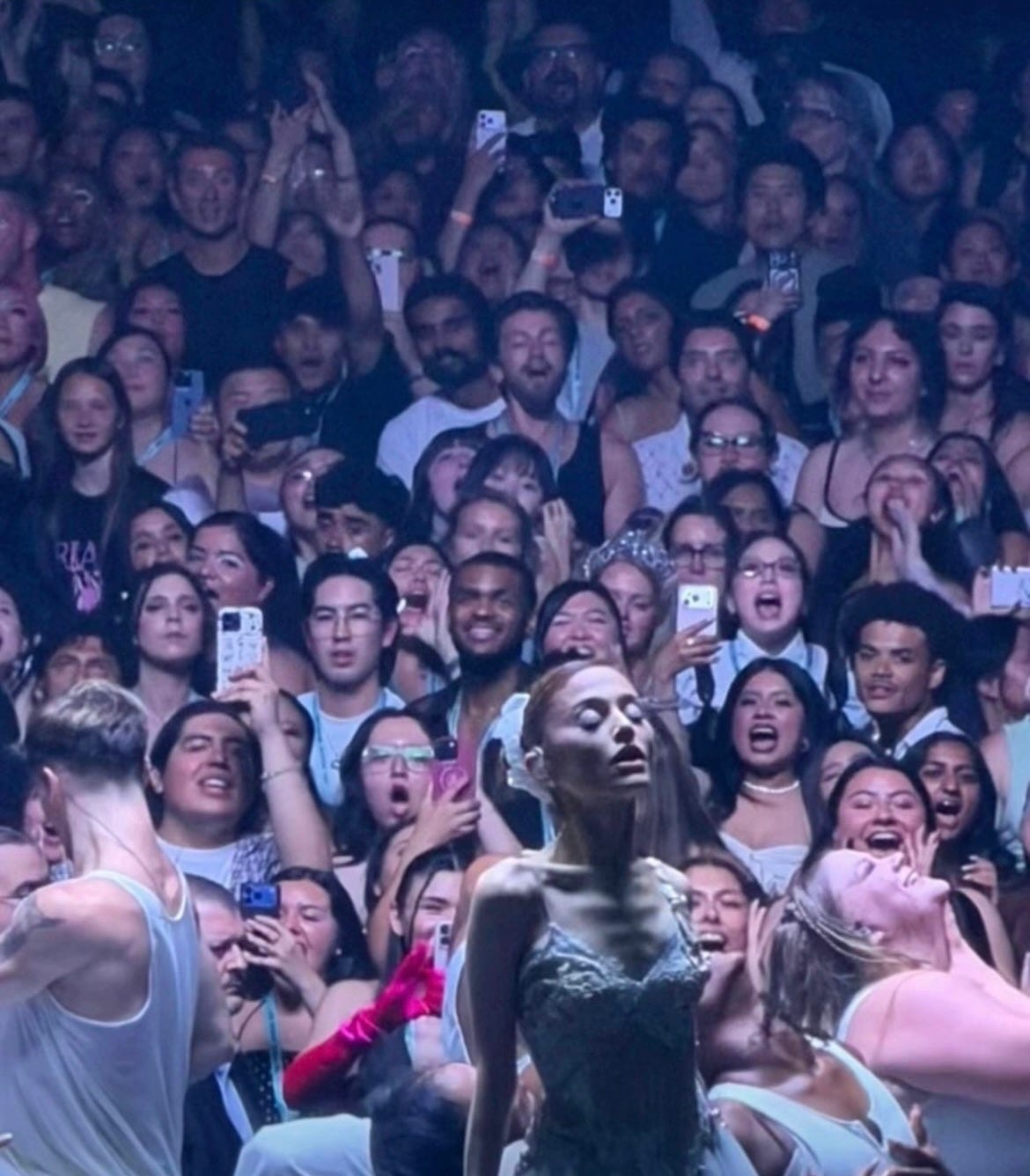
People are really focused on Ariana Grande these days. There are a lot of headlines with some variation on “why can’t we talk about this person’s weight?” as if we aren’t all doing that. I don’t know Ariana Grande, and I don’t really listen to her music beyond what I hear on the radio in a cab or on a late night bodega run. I know she dated Spongebob, but I also guess they are broken up now? I also know she and Spongebob cheated on previous partners, and she was in Wicked. That’s it, that’s the extent of my knowledge about this person. I’m sure there is lore and drama I’m missing in my analysis. I also have never taken Ozembic and, although I’ve struggled with many other mental health issues including the occasional body issues, I have been graciously spared from having an eating disorder. Basically, I’m talking out my ass here.
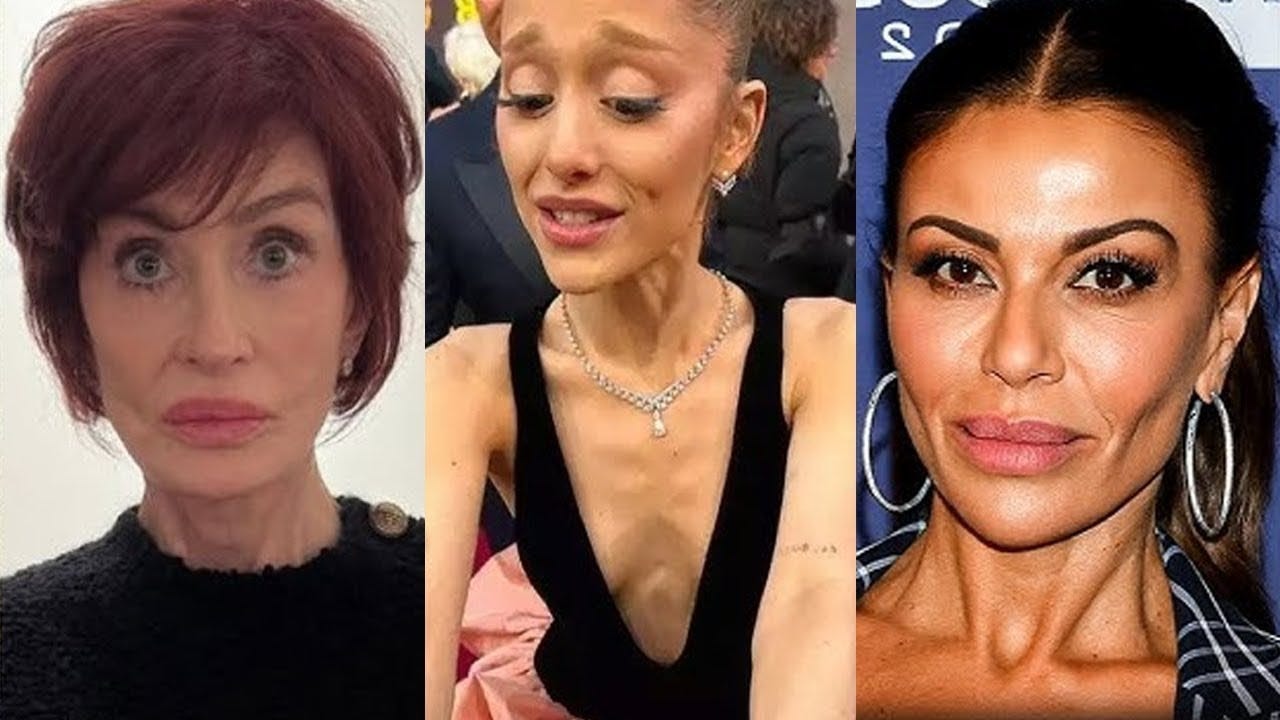
Ariana Grande might be the most prominent example of recent body trends, but she’s far from the only one. Many, many female celebrities are becoming skeletally thin at a rapid rate. There is a lot of anxious discourse around female celebrities bodies when they get too thin. It’s like we all know a new beauty standard just dropped, and even if everyone publicly says that its unhealthy, unrealistic, or not something they want to embody themselves, privately we all know that we will be held to it by society’s standards. Public, celebrated anorexia is very in right now.
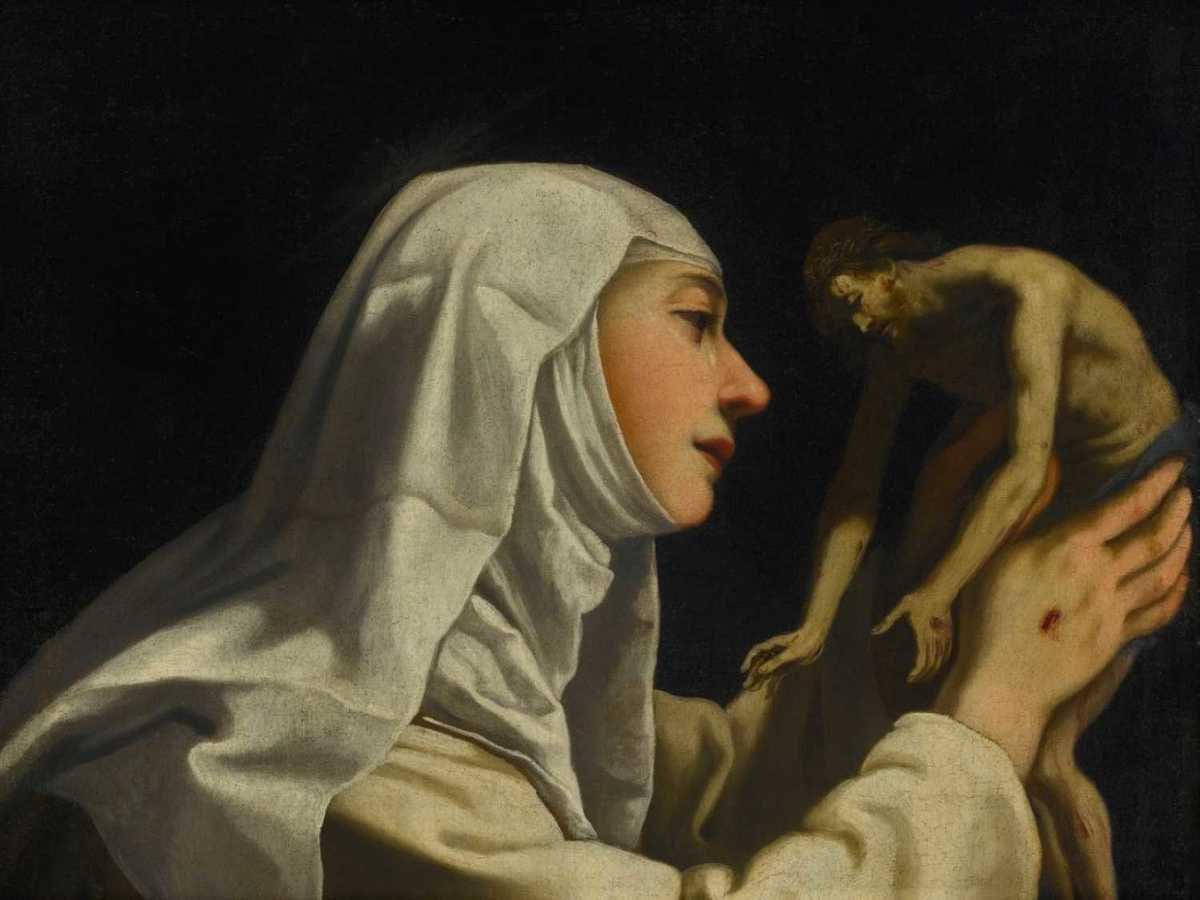
St. Catherine of Sienna was a medieval mystic born in 1347 in Siena, Italy. She is known for being one of the most prominent ascetics of of the middle ages. As a child, Catherine would wear pins under her clothes to prick and stab herself, against her parent’s wishes. Later in life, she would wear a crown of thorns and dark robes despite not belonging to a religious order. She was a writer and mystic and gained enough celebrity in her time to help reunite the divided catholic church. As part of her asceticism, she is one of the most famous so called “holy anorexics” of all time. In the final months of her life she was said to only consume the eucharist. At 33, she died of malnourishment, having starved herself to death.
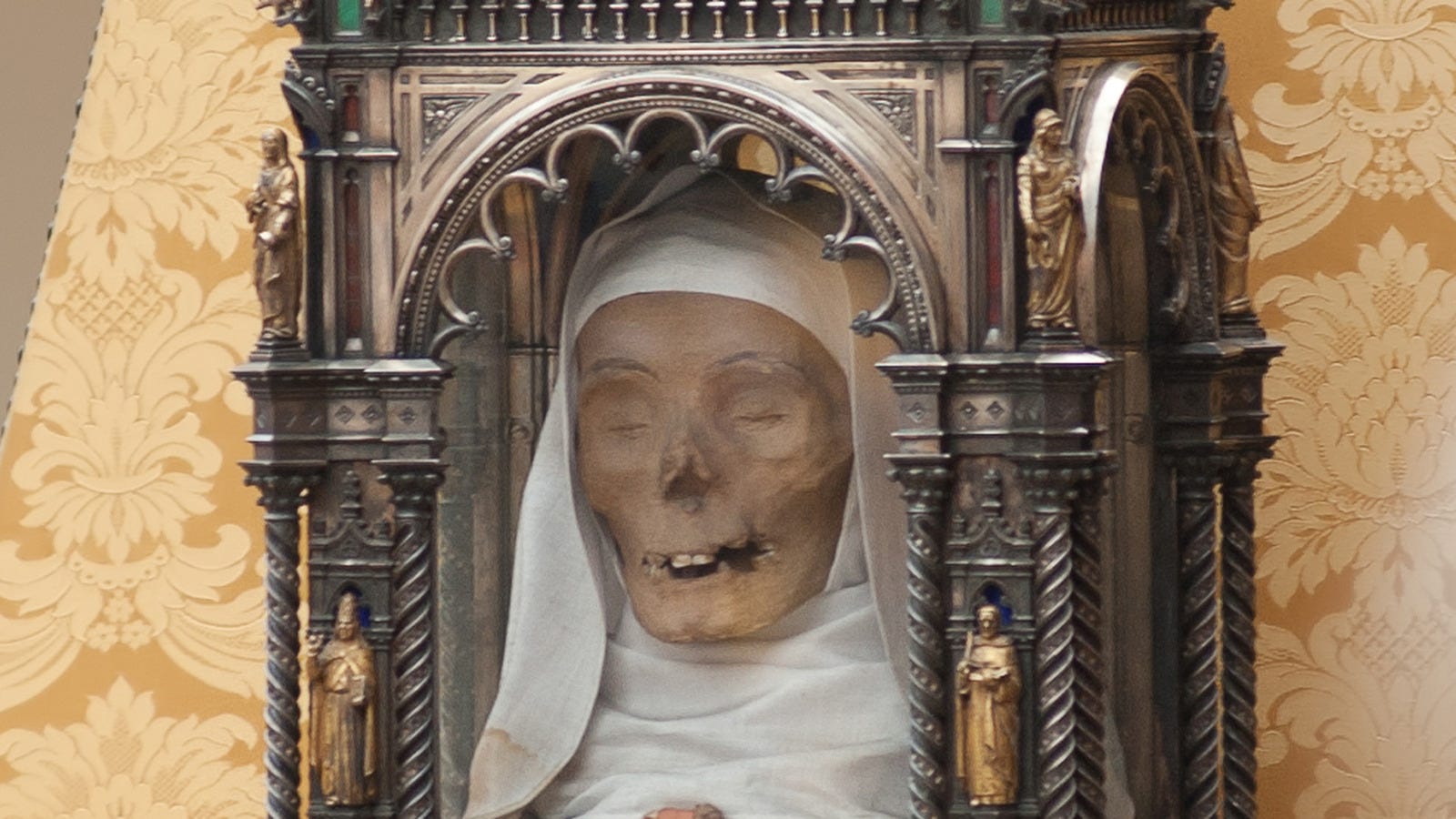
The thing to remember about a figure like St. Catherine this that she, like other female mystics throughout history, was initially met with skepticism and caution. Anorexia was not itself seen as holy, especially in a time of great food scarcity in Europe, and the condition was usually viewed as demonic or disordered. In her own time she was disbelieved and called a witch. It was only through her own self-advocacy, writing, and testimony that she was able to convince people at the time that her anorexia was holy, rather than harmful.
According to Rudolph M. Bell in Holy Anorexia:
“When her fame grew, enemies fastened hard on her well-known refusal or inability to take food and variously charged her with being a liar, an unholy egotist, and a witch. Supporters and confessors urged or ordered her to eat; when she did so it was only to enter into an eating/vomiting cycle such as is common among acute, long-term anorexics. Whatever the primacy of physical circumstances involved, it was Catherine’s will that shaped the course of her infirmity and gave it meaning…No one, including Catherine, saw her diet in itself as something heroically ascetic. On the contrary, by the sheer power of her conviction she convinced people that behavior commonly thought to be insane or demonic was holy.”
Basically, if a normal person has anorexia, it is a sign that something is wrong, but if a holy person has anorexia, it is a sign of their deep love for God. So, how does this transformation occur? Where does one transcend the line from mentally ill person to saint? Furthermore, even though Catherine was something of a celebrity at the time, why does her starvation feel different from what we see widely now in culture?
It probably has to do with the fine yet deep line between self-obsession, and self-obliteration. With Saint Catherine, and other holy people across traditions, there comes a point where all spiritual work comes back to realizing and living in the truth that there is no self, only the divine, and that separation and the ego are myths. Catherine was adamant in her writing that she did not hate herself, but loved God. Any moment spent identifying with her ego was a moment separated from her lover, and her starvation and bodily harm were means by which she could return to her beloved. Self-annihilation, ego death, was an erotic experience through the body in order to merge her body with that of her lover.
Catherine wrote about her love of God the way romantic poets write of erotic love of another human. She said “The soul is in God and God is in the soul. God is closer to us than water is to a fish.” and refers to Christ as her bridegroom. Again and again she wishes to be pierced, penetrated, wounded, and marked by God. In The Dialogue, her most famous work recounting her conversations with God, she doesn’t talk about her love of God in a quiet or pious way, she hungers for him, drinks the blood from his side wound. Her last words on earth were just one word: “blood” said over and over again until she passed. Her desire to only eat the eucharist is a holy erotic desire to only devour and devour the body of her lover.
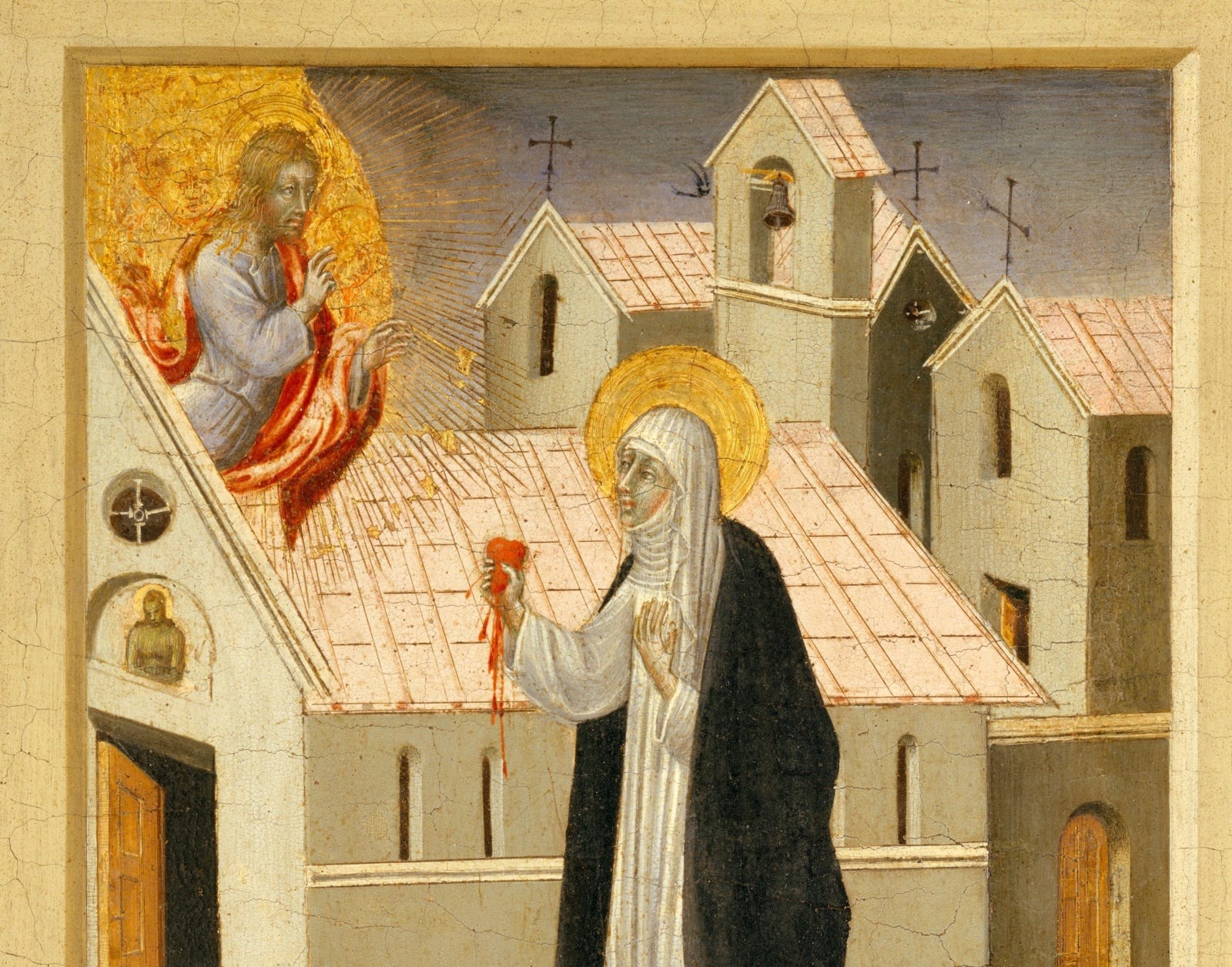
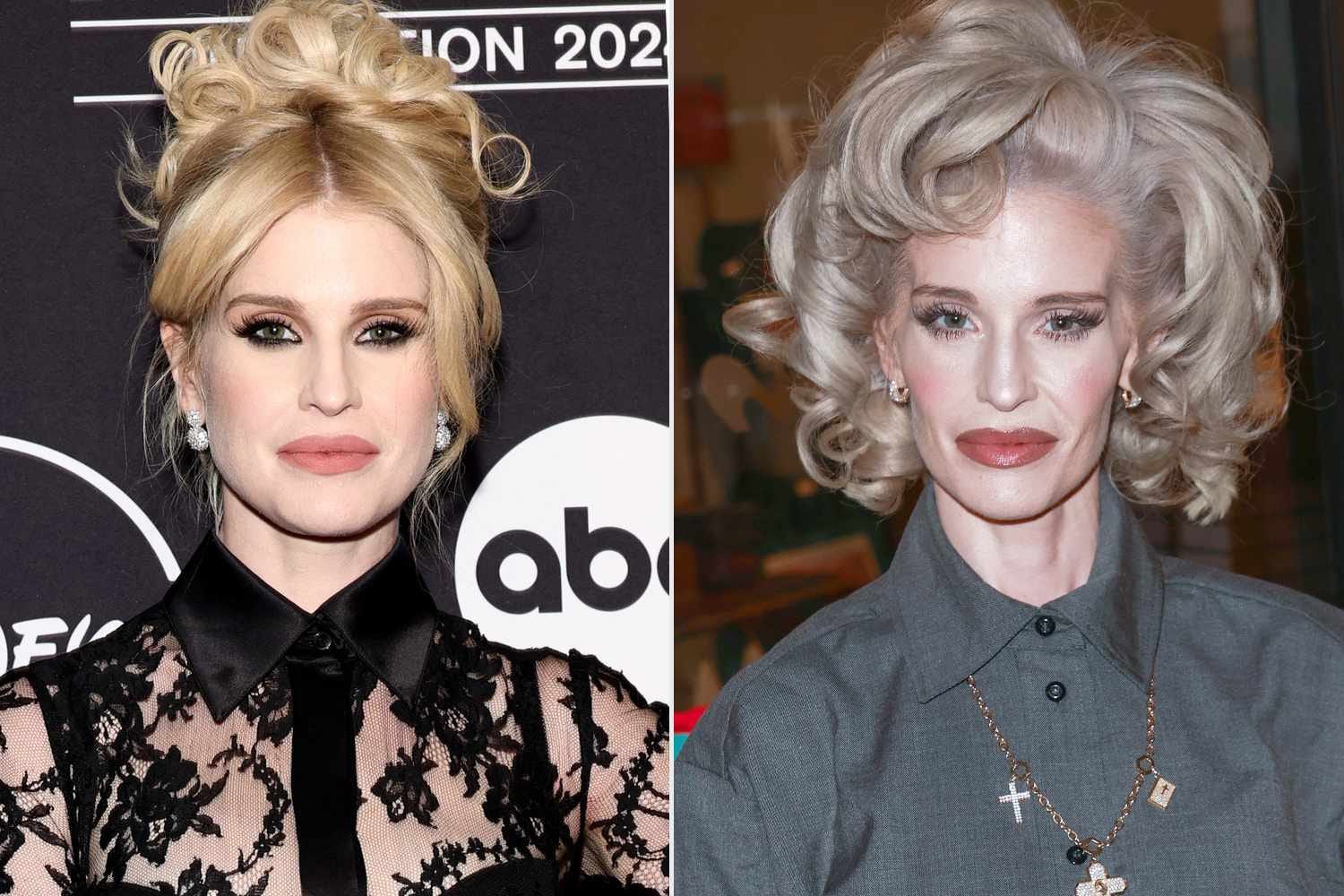
Meanwhile, the way influencers, celebrities, and modern culture at large talks about weight loss and diet is decidedly non-erotic, even anti-erotic. Consider the way Kelly Osbourne spoke about her weight-loss on the Hollywood Raw Podcast. She describes “putting herself first” and that “I had to fix my head before I could fix my body.” She then goes on to credit her weight loss, in part, to meditating 20 minutes a day to “fix the things that were broken in me.” This is not a mystic lost in prayer so deep they forget to eat, just to be closer to their beloved. It is a person using spiritual technology to self-optimize. As Dr. Caroline Walker Bynum notes in her book Holy Anorexia in Modern Portugal “The twentieth-century girl refused food in order to assert control over her body; the fourteenth-century saint refused food in order to eat God and feed her fellow sinner.”
Meanwhile, in The Dialogue, Catherine urges “love fixed more on virtue than on penance” and goes on to say of her own body “as fire grows when it is fed with wood, so grew the fire in that soul to such an extent that it was no longer possible for the body to endure it without the departure of the soul…This soul then, being purified by the fire of divine love, which she found in the knowledge of herself and of God, and her hunger for the salvation of the whole world.” Compare this erotic language to skinny influencer Liv Schmidt who says she stays skinny because “I eat to fuel my body, not my emotions.” X
There is a paradox here, Catherine’s holiness comes from a rejection of identification with the body, and yet her writing is much more embodied and sensual than the way we talk about the body now.
We don’t really have saints anymore. The American tax code isn’t really structured to reward true ego death or pious renunciation of the self in order to recognize the inherit oneness of everything. It’s structured towards cult-creation, toward making yourself an LLC, and then selling the story of your mental health/spiritual/fitness/weight loss/health/wellness journey back to people through social media and online courses (btw join my online course). It’s never been easy to be a saint, but it’s never been easier to be selfish.

When I say “selfish” I mean that word neutrally, without judgement. Catherine’s anorexia went from disordered to holy when enough people became convinced it was a sign of devotion to God. Today’s celebrities, influencers, and pop stars are still clearly devoted to something, but it feels meaner, crueler, an inverted from the erotic, divine love Catherine spoke of. Again, Liv Schmidt constantly uses the language of a bully to describe eating and food, saying “being skinny is simply just not being a gluttonous little pig” and warns against “making your body the trash can.”
I said earlier I’ve never suffered from an eating disorder, but I’m not above looking at my body and wishing it looked different. I’m not so evolved that I don’t look at my stomach and say cruel things to it, as if that could make it a different shape. But am I even this body?

St. Catherine had a metaphor for the soul’s tie to God: a mirror. In The Dialogue, she states: “As the soul comes to know herself she also knows God better, for she sees how good he has been to her. In the gentle mirror of God she sees her own dignity: that through no merit of hers but by his creation she is the image of God.” This is a very different mirror than a physical one we stare into all day on our screens, the mirror we just live in now, which reflects back a backwards version of the self. To Catherine, contemplation of God is supposed to bring one a greater sense of self love not through an obsession with the ego, but through a recognition of oneself with God, and therefore an obliteration of the line between the self and God.
My most popular post on this blog is called Lindy West and the Secular Cult of Martyrdom. In that piece I argued that many women sacrifice themselves to relationship dynamics that don’t work for them out of some sense of doing it for a greater cause, or reaching for something higher. I think something similar is happening here.
I think women don’t long to be thin, so much as they long to not have to think about thinness anymore. Or, as Liz Plank but it in her recent, great, piece on Ariana Grande “I truly think that women don’t want to be thin nearly as much as they want to be free from wanting to be thin.” ****In starvation, dieting, anorexia, there is an imagined goal that one can reach in which, presumibly, the desire for said goal will disappear entirely. There is an imagined, almost platonic, form of beauty that women feel like once we reach it, we will be out of the reach of patriarchy, quiet the negative voices in our head, stop overthinking our meals and workouts. It is an inverted, malefic form of the mystical union people like Catherine reached for. Like the imagined form of beauty and perfection women search for in self-starvation, God does not “exist” in the strict form of an object. God is not a place one can reach and live in like a physical location, it is not an object you can hold in your hands and quantify and measure. God just is.
In The Dialogue, when Catherine asks God who he is, he says “I am he who am, you are she who is not.” Catherine’s discovery through her mystical union with the divine, similar to a lot of Eastern traditions, was a non-dual awareness of reality. Her suicide through starvation was driven by a renunciation of identification with the body, this is in complete opposition to a culture which demands over-identification with the body. Specifically, a body-made-object which can be sold endless means by which to achieve this impossible perfection.
♦️♣️ If you found this essay interesting, I am teaching a class on pain and Catholic mysticism starting July 14, 2026 through Laetitia Cartomancy. For tickets and more information, click here. ♥️♠️
This post has a soundtrack and it's "Divinize" by Rosalia
It's a psy-op to make women literally weak as far as I can tell